I have been struck by how difficult it has become to answer a seemingly simple question: how much oil is actually available to the global market? During a normal period, inventories, tanker movements and production figures give investors a reasonably clear picture of supply and demand. During an active geopolitical shock, however, those numbers become much harder to interpret.
The fog of war
That uncertainty is becoming the central feature of the current oil market. The question is no longer simply whether supply has been disrupted. It is how large the disruption really is, how long it will last, and how quickly consumers can adjust.
The disagreement between Goldman Sachs and JPMorgan illustrates the problem.
Goldman Sachs estimates visible global inventories at around 7.7 billion barrels, including landed storage, Chinese domestic stocks and strategic petroleum reserves. From this perspective, the global oil market has substantial buffers.
JPMorgan takes a considerably different approach. Its estimate of global inventory is closer to 6.8 billion barrels, but the more important difference is what it considers usable inventory.
Oil sitting in a pipeline cannot simply be removed without disrupting the pipeline itself. Oil aboard ships is technically inventory, but some of those barrels are already committed to voyages and cannot immediately reach a refinery. Strategic reserves may exist in large quantities but can take time to release.
So the headline inventory figure may overstate the amount of oil that can actually respond to a short-term supply shock.
The net effect: almost a billion barrels of oil inventories is not trivial. It is the difference between muddle-through and disaster.
Diesel could be the bigger problem
One area where the picture appears less ambiguous is diesel.
The disruption to exports and refining has pushed diesel prices to record levels in the United States and elevated levels elsewhere. That matters because diesel is not simply another petroleum product. It is deeply embedded in the global economy.
Trucks, ships, agricultural machinery and industrial equipment all rely heavily on diesel. That means a diesel shortage can spread through the economy even when there is not an outright shortage of crude oil.
The transmission mechanism is straightforward.
Higher diesel prices increase the cost of trucking and shipping. Higher freight costs increase the cost of moving commodities. Producers may receive less for their products after transport costs, while consumers may pay more for delivered goods. Industrial businesses also face higher operating costs.
The important point is that the global economy does not need to run out of crude oil for energy shortages to become inflationary. Refined products and transportation costs can do much of the damage themselves.
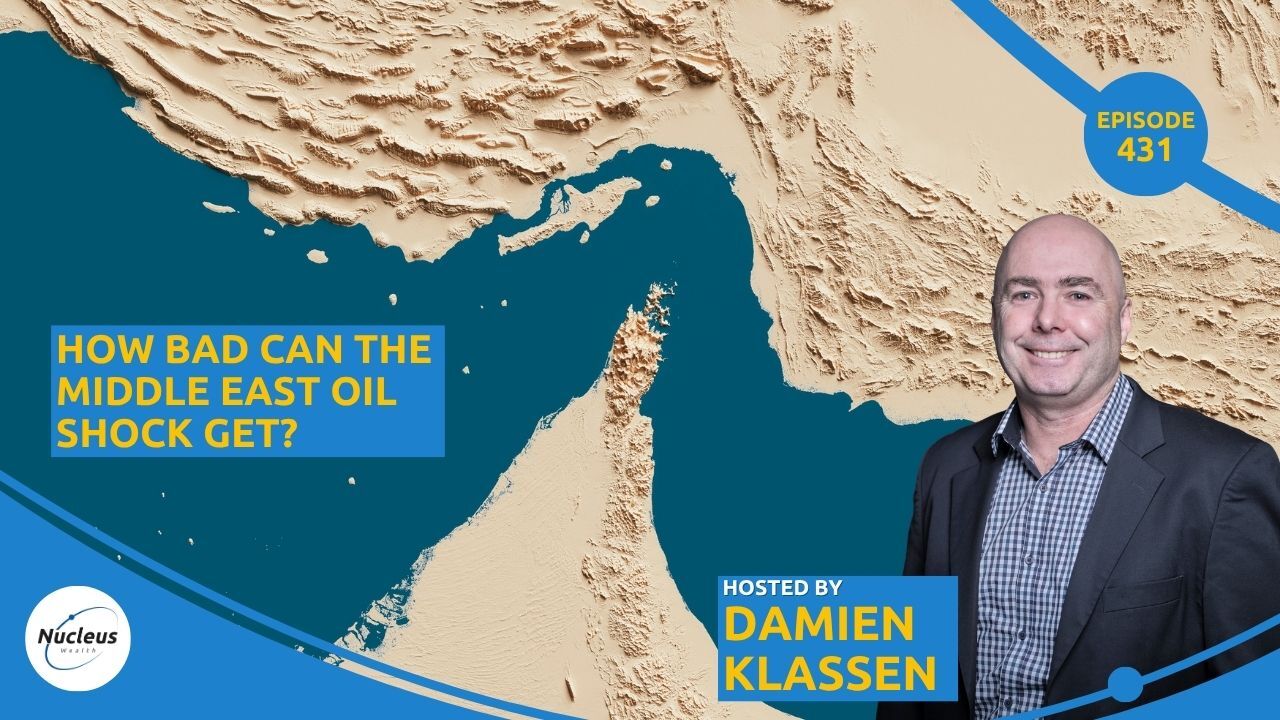
What is really happening through the Strait of Hormuz?
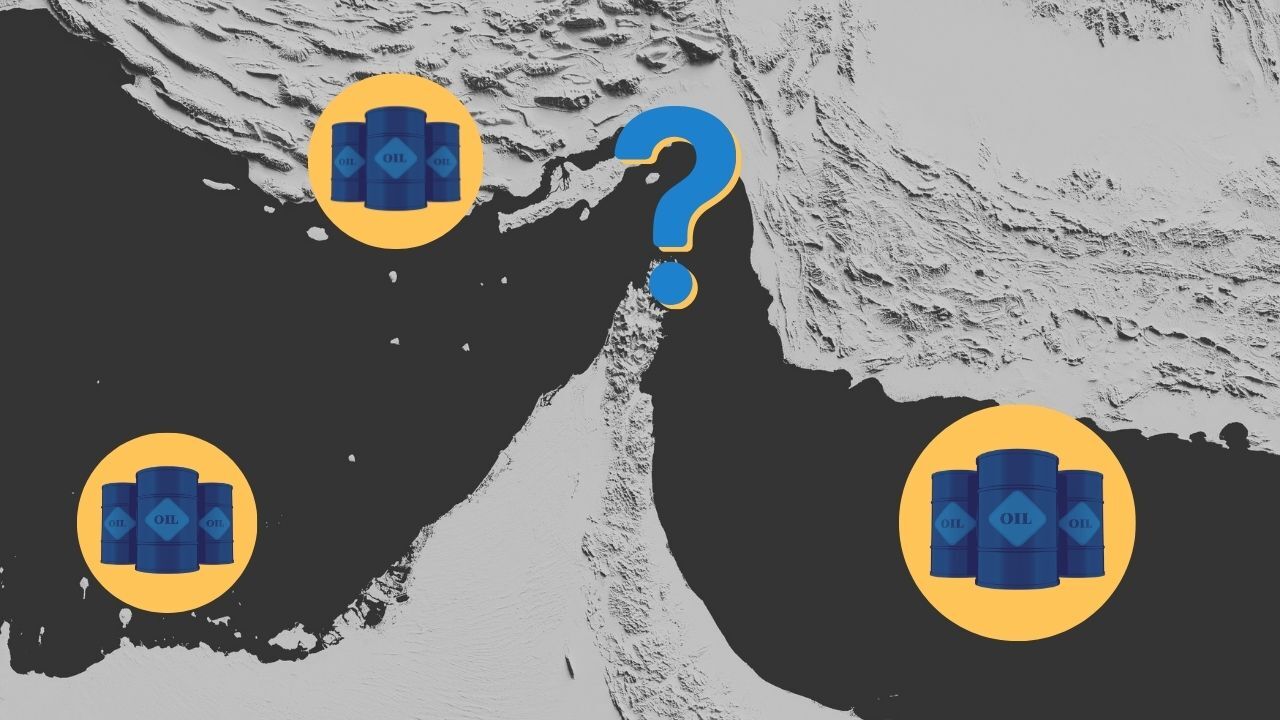
The Strait of Hormuz is another example of why headline data can be misleading.
It is tempting to look at the number of vessels crossing the Strait and conclude that oil flows are either functioning normally or have effectively stopped. But ships are not interchangeable. A handful of large tankers can transport more oil than a dozen smaller vessels.
The situation is further complicated by vessels switching off their transponders to reduce their visibility. Conventional shipping data therefore provide an incomplete picture. Satellite imagery can help fill the gaps, including by estimating how heavily loaded vessels are based on how low they sit in the water.
The current system is that producers can load vessels inside the affected region, move them outside the Strait and transfer the oil to another ship. The empty vessel can then return for another load. Governments and regional producers have a much stronger incentive to keep this system operating than ordinary commercial shipping companies because their revenues depend directly on exports.
As a result, the Strait is not simply open or closed.
The reported flows have varied dramatically, from days approaching the pre-war level of around 18 million barrels per day to days closer to 3–4 million. A more useful recent indicative range is around 8–10 million barrels per day, with flows appearing to increase over several weeks.
That volatility matters in itself. Even if the average flow is manageable, large day-to-day fluctuations force inventories to absorb the difference.
Pipelines add another layer of uncertainty
Pipeline attacks create another variable. If damaged pipelines can be repaired quickly, their impact may ultimately be limited. If they remain offline, however, they remove an alternative route for moving oil and make disruptions to tanker traffic more consequential.
But we just don't know which it is.
Politics matters because supply is not the only variable
The Middle East is only part of the story.
China, Iran, Russia and Ukraine all have their own economic and political incentives, and the approaching U.S. midterm elections add another layer to the uncertainty.
China initially reduced purchases and drew on domestic supplies, apparently helping keep prices lower than they might otherwise have been. Now, renewed buying is putting upward pressure on prices, and China may see strategic value in higher oil prices putting pressure on Trump.
Iran also has incentives to preserve leverage while the U.S. political timetable develops. Can Iran help usher in US "regime change"? Higher oil prices until the mid-terms is their best bet.
Meanwhile, Ukraine has continued targeting Russian refineries and oil infrastructure. The direct crude-oil loss from Russian attacks may be around 1 million barrels per day, but the impact on refined products could be considerably larger, potentially around 2–2.5 million barrels per day.
Net effect: expect volatility in the run up to the US elections.
How large could the actual shortage become?
Global oil consumption is roughly 100–105 million barrels per day. Before the conflict, supply may have exceeded demand by around 3–5 million barrels per day. Higher prices have already reduced demand, helping absorb some of the initial disruption.
The range of possible outcomes is therefore unusually wide.
A more favourable scenario produces a shortage of around 3–4 million barrels per day. A more severe Middle Eastern disruption could remove 8–10 million barrels per day, while an extreme combination of disruptions across the Middle East and Russia could approach 15 million barrels per day.
The market has two broad ways to deal with that gap: draw down inventories or push prices high enough to destroy demand.
The first few percentage points of demand reduction are relatively easy. A 10–20% increase in prices would probably remove another 5 million barrels per day of consumption relatively quickly. But the adjustment becomes exponentially more painful from there.
That makes the relationship between oil prices and demand nonlinear. Each additional reduction in consumption may require a substantially larger price increase and cause progressively more economic damage.
Two very different paths from here
The bearish scenario for the global economy is a prolonged physical shortage.
Path 1: Another forever war
Middle Eastern infrastructure remains impaired, attacks on Russian energy infrastructure continue, and inventory buffers gradually run down. At that point, the market would need genuine demand destruction rather than simply relying on stored oil.
Under this scenario, prices could potentially need to reach $150–200 a barrel to force a sufficiently large reduction in consumption.
Path 2
If political conditions improve, several sources of supply could return at the same time.
A reopening of the Strait, repaired infrastructure, reduced attacks and additional production elsewhere could create a very different problem: too much oil.
If supply returns, it might still find a world rapidly moving off oil to reduce geopolitical risk.
This creates an unusual asymmetry. A prolonged disruption could drive prices dramatically higher, but a sudden political settlement could produce an equally rapid reversal.
What does this mean for investors?
From my perspective, the biggest mistake would be to become overly confident in either extreme.
There are reasonable arguments that the oil market has enough buffers to absorb a significant disruption. There are also reasonable arguments that much of those buffers are not immediately accessible, leaving the physical market considerably tighter than headline inventory numbers suggest.
For portfolios, that argues for resilience rather than a bet on one specific outcome.
I would also pay particular attention to diesel rather than crude oil alone. Refined-product shortages can remain severe even when crude supply appears manageable, and those shortages can feed into freight, industrial costs and broader inflation.
Expect heightened volatility until at least the US election. The outcome of that will determine the next direction for oil.