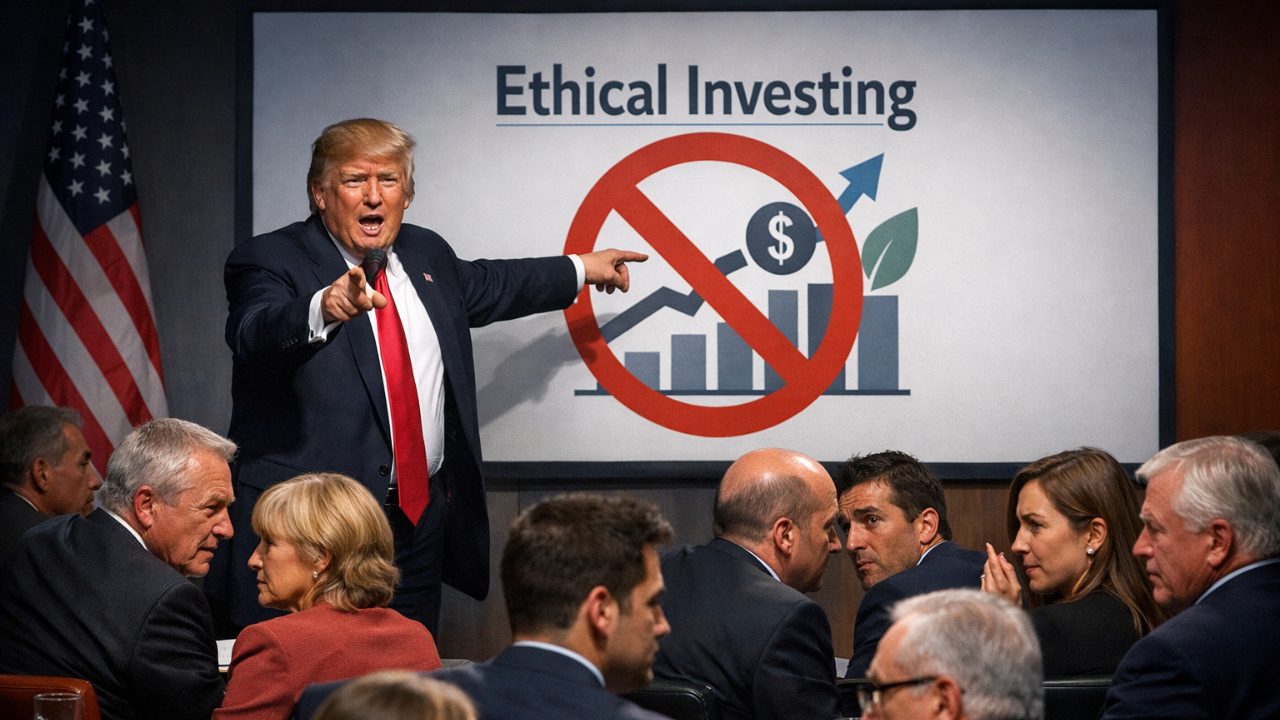
Ethical investing has a noise problem.
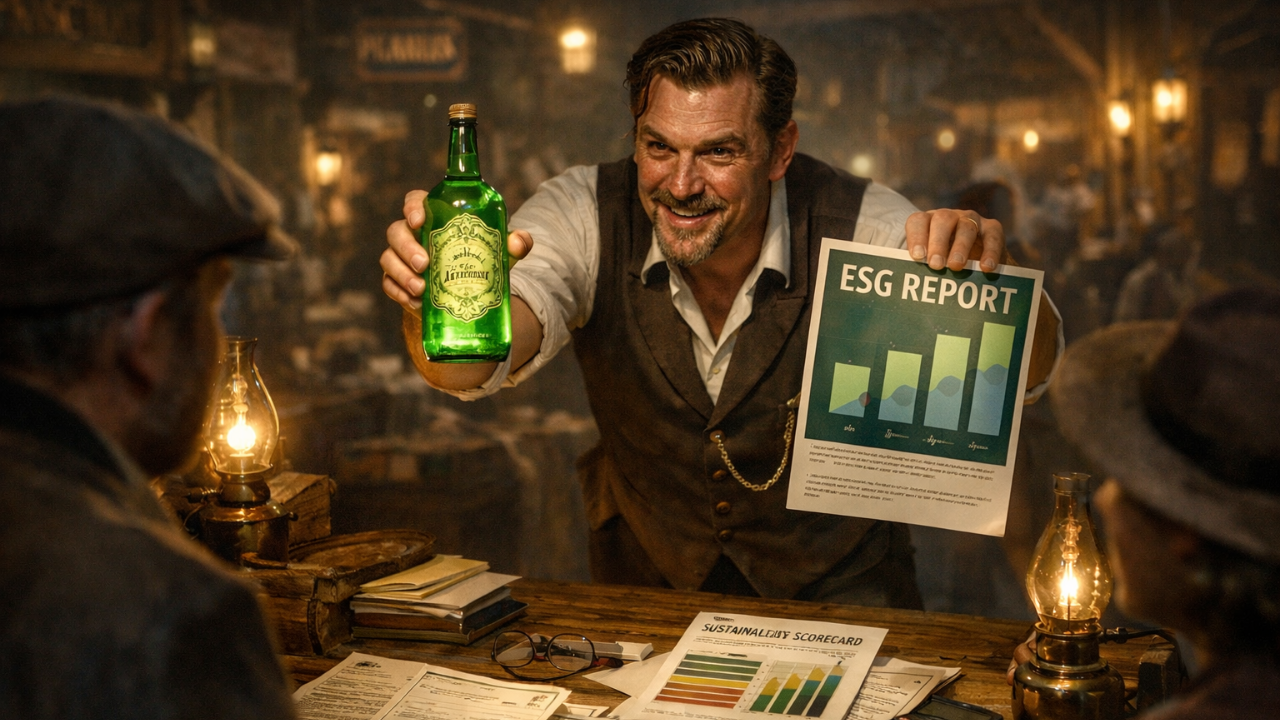
Marketing departments love it. Fund managers put green logos on traditional products. They call it sustainable. Then you check the holdings. You find major fossil fuel producers sitting next to big banks.
That is greenwashing. It happens every day in Australia.
Investors want real control. They want portfolios that match their personal values. They do not want a fund manager’s political opinion.
This guide explains how ethical investing actually works. It covers negative screening, positive tilts, and how to build a portfolio that reflects your values without sacrificing financial returns.
What Is Ethical Investing?
Ethical investing aligns your financial goals with your moral standards.
Traditionally, fund managers chose stocks using two metrics: risk and return. Ethical investing adds a third dimension: values.
In Australia, ethical strategies generally fall into two main categories:
- Negative Screening: Removing companies or whole sectors that do not meet specific moral or environmental standards.
- Positive Screening (or Tilting): Overweighting companies that demonstrate strong Environmental, Social, and Governance (ESG) practices.
Most off-the-shelf ethical funds combine both methods. However, standard funds use a "one-size-fits-all" definition of ethics. What is ethical to a fund manager in Sydney might not align with your personal views.
Negative Screening vs. Positive Screening
Understanding the technical difference between screening types is critical for building a clean portfolio.
|
Feature
|
Negative Screening
|
Positive Screening / Tilting
|
|
Primary Goal
|
Avoid harm
|
Reward performance
|
|
How It Works
|
Excludes specific sectors or companies
|
Increases capital allocation to top ESG performers
|
|
Examples
|
Excluding tobacco, armaments, or fossil fuels
|
Increasing exposure to renewable energy leaders
|
|
Control Level
|
High (binary binary yes/no rule)
|
Moderate (based on relative scoring)
|
|
Risk Profile
|
Can create sector concentration risk
|
Keeps sector exposure closer to benchmark
|
How Negative Screening Works
Negative screening sets hard boundaries.
If a company generates revenue from a banned activity, it is excluded. There are no exceptions.
Common negative screens in Australia include:
- Fossil Fuels: Thermal coal, oil, and gas extraction.
- Harmful Products: Tobacco, alcohol, and weapons manufacturing.
- Gambling & Gaming: Poker machine operators and online casinos.
- Animal Cruelty: Testing, factory farming, and fur production.
- Human Rights Violations: Poor supply chain labour practices.
The Problem with Relative ESG Scores
Positive screening relies on ESG ratings.
Rating agencies score companies relative to their peers. This approach creates absurd outcomes. A major oil company can receive a high ESG score simply by publishing detailed corporate governance reports or setting long-term net-zero targets.
Negative screening avoids this trap. It looks at actual business activities, not corporate disclosures.
The Greenwashing Trap in Australian Funds
Greenwashing is widespread in the Australian financial industry.
Super funds and Exchange Traded Funds (ETFs) market themselves as "Sustainable" or "Conscious." Yet, when you review their top 10 holdings, you often find:
- Mining giants with nominal green energy subsidies.
- Banks funding fossil fuel expansion.
- Tech giants with supply chain ethics issues.
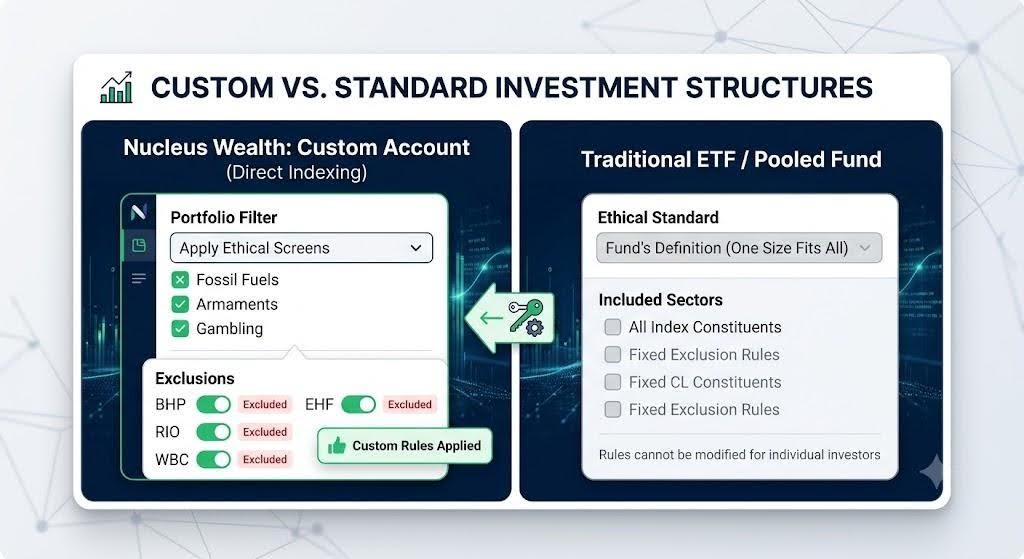
Standard Ethical ETF Structure:
[ Underlying Index ] ──> [ Commercial ESG Score Filter ] ──> [ Compromised Portfolio ]
Direct Indexing Structure:
[ Underlying Index ] ──> [ Your Personal Ethical Rules ] ──> [Customised Portfolio ]
Why Standard Funds Compromise
Pooled funds must satisfy thousands of investors simultaneously.
To avoid tracking error against the broader market, fund managers compromise. They loosen their screening criteria. They keep large cap stocks in the portfolio to maintain liquidity and performance benchmarks.
The result? You pay higher management fees for a product that fails your personal ethical standards.
Does Ethical Investing Cost You Returns?
The most common myth in finance is that ethical investing forces you to accept lower returns.
The data shows otherwise.
The Performance Myth
Excluding bad businesses does not automatically hurt your returns. If investors knew “for sure” that sector X is undervalued, then they will buy sector X until the price is fairly valued.
The right negative screening might even protect your portfolio from long-term structural risks which the market might be underestimating:
- Stranded Asset Risk: Fossil fuel infrastructure risks devaluation as global policy shifts toward renewables.
- Regulatory Risk: Companies with poor environmental or labor standards face higher legal costs and regulatory fines.
- Reputational Risk: Consumer boycotts directly hit revenue and share prices.
Managing Sector Bias
Negative screening changes your portfolio's sector exposure.
If you exclude mining and banking, your portfolio tilts heavily toward technology, healthcare, and industrials.
During commodity booms, an ethically screened portfolio may underperform the ASX 200. During tech rallies, it may outperform.
The solution is broader diversification. By expanding your investment universe globally, you can screen out unethical local companies without sacrificing diversification.
Building a Customized Ethical Portfolio
Investors no longer need to accept off-the-shelf ethical products. Modern financial technology enables true portfolio customization.
Direct Indexing vs. Pooled Funds
|
Option
|
Customization
|
Transparency
|
Tax Efficiency
|
|
Standard ETFs
|
Zero (Fixed rules)
|
High
|
Low
|
|
Retail Super Funds
|
Very Low
|
Low
|
Very Low
|
|
Direct Indexing
|
Full (Individual screens)
|
Complete (Direct share ownership)
|
High (Individual cost bases)
|
How Direct Indexing Solves Ethical Investing
Direct Indexing allows you to own the underlying shares directly rather than buying units in a pooled fund.
Because you own the individual shares, you can apply custom rules:
- Exclude Specific Stocks: Keep overall index exposure while banning specific companies you dislike.
- Apply Custom Thresholds: Set revenue limits (e.g., exclude companies with >5% revenue from fossil fuels).
- Maintain Tax Control: Realise capital gains or losses on individual stocks without triggering tax events for other investors.
You set the rules. The technology manages the portfolio.
Key Takeaways for Australian Investors
- Demand Transparency: Check full underlying holdings before buying any "ethical" fund. Do not rely on marketing labels.
- Separate Opinions from Facts: Define your personal ethical boundaries rather than adopting a fund manager's worldview.
- Use Hard Screens: Prefer negative screening over vague ESG scoring models to avoid greenwashed companies.
- Look Global: Expand beyond the ASX to maintain diversification when applying strict ethical exclusions.
- Consider Direct Indexing: Direct share ownership provides the customisation needed for true ethical alignment without unnecessary fees.